

TL;DR:
- Effective A Level maths revision requires goal-setting, targeted practice, and continuous self-assessment.
- Deliberate practice with mark schemes and mistake diaries improves understanding and reduces errors over time.
- Combining strategic planning, calculator accuracy, and a growth mindset maximizes exam performance.
Plenty of students sit down with a stack of past papers, grind through question after question for weeks, and still fall short of their target grade. The issue isn't effort. It's direction. A Level maths rewards students who understand where their marks are leaking, how to fix specific weaknesses, and what to do in the exam room when the pressure is on. This guide cuts through the generic advice and gives you a structured, evidence-based approach to revision that targets the habits and techniques that genuinely move the needle from a C to an A.
Table of Contents
- Set clear revision goals and criteria
- Master quality over quantity: practice with intention
- Check, don't just input: calculator and working edge-cases
- Adopt a growth mindset for sustained improvement
- Bring it all together: making your plan actionable
- Why strategic exam preparation beats last-minute cramming every time
- Take your maths revision further with targeted resources
- Frequently asked questions
Key Takeaways
| Point | Details |
|---|---|
| Prioritise revision goals | Start with a clear plan that focuses your efforts on high-impact areas for greatest progress. |
| Practise with purpose | Deliberate, reflective practice with feedback outperforms just doing more questions. |
| Master calculator technique | Minimise errors by showing your working and always checking calculator settings and rounding. |
| Adopt a growth mindset | Belief in improvement and resilience to setbacks are linked to higher achievement in maths. |
| Make your plan actionable | Transfer strategies into a realistic, flexible weekly schedule for lasting exam success. |
Set clear revision goals and criteria
Most students jump straight into practice questions without first asking: which topics am I actually weak on? That's a costly mistake. Before you touch a past paper, sit down and audit your performance. Look at your mock scores, teacher feedback, and any topic tests you've done. Rank your subjects by weakest to strongest, and let that ranking drive your revision calendar.
Breaking the A Level maths syllabus into manageable chunks helps you make steady, visible progress rather than feeling like you're drowning. Try this framework:
- Identify priority topics: Anything scoring below 60% in mocks goes to the top of your list.
- Group by module: Separate Pure, Statistics, and Mechanics so you can rotate across them each week.
- Set weekly targets: Aim for one to two topics per week, with clear success criteria (e.g. scoring 80% on three consecutive question sets).
- Include review sessions: Every Friday, revisit topics from the previous week to consolidate memory.
- Leave buffer time: The fortnight before exams should be for refinement, not new material.
Performance benchmarks matter here. The A Level average point score per entry sits between 35.55 and 36.09, which is a useful reality check when setting grade expectations. Knowing where the average lies helps you calibrate ambition without losing motivation.
Pro Tip: Use a maths exam preparation checklist to map your revision against the full specification. Ticking off completed topics gives you a sense of progress and makes it obvious where gaps remain.
Periodic self-assessment is non-negotiable. Every two weeks, test yourself under timed conditions and update your priority list. The topics you needed most at the start of revision may not be the same ones you need help with by April. Stay responsive. You can find more top revision strategies that complement this goal-setting approach.
Master quality over quantity: practice with intention
Doing fifty questions on integration won't help much if you're repeating the same mistakes on all fifty. Deliberate practice means treating each question as a diagnostic tool, not just a box to tick.
Here is a step-by-step process to make every revision session count:
- Attempt the question in full: Work under exam conditions. No peeking at notes.
- Mark it using the mark scheme: Don't just check if your final answer is right. Read the method marks carefully.
- Identify the exact error: Was it a conceptual gap, a calculation slip, or a misread question?
- Write the correction in full: Rewrite the solution correctly in your mistake diary (more on that below).
- Revisit it 48 hours later: Attempt a similar question to confirm the lesson has stuck.
"Quality control in method and calculator use is crucial for higher marks — it's not only about practice quantity." (Casio Education)
Mark schemes are underused by most students. They reveal which steps earn marks and which are optional. Reading through a mark scheme after every question teaches you the language examiners reward, not just the correct numerical answer.
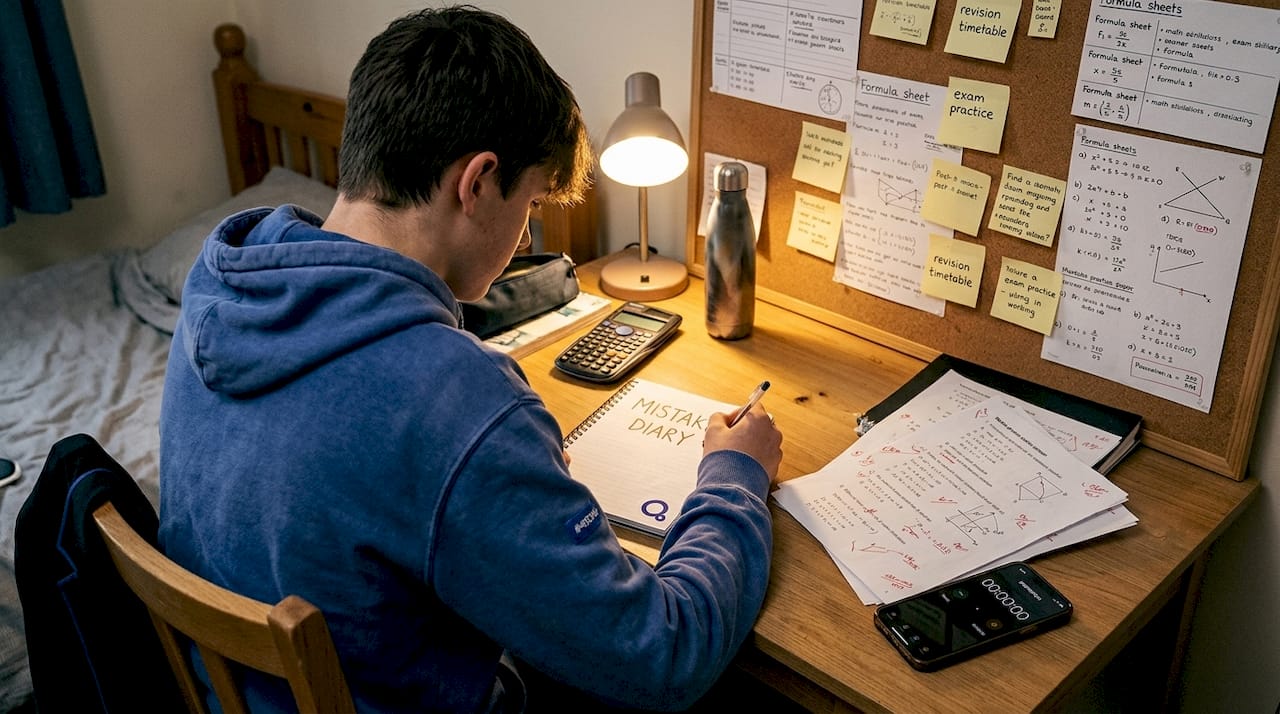
Pro Tip: Keep a physical or digital mistake diary. Every time you get a question wrong, log the topic, the specific error, and the correct method. Review it weekly. Students who do this consistently improve exam performance significantly faster than those who simply redo questions at random.
The goal is to shrink your error patterns over time. If you notice you're repeatedly dropping marks on integration by parts, that's not bad luck. It's a signal to slow down and rebuild from first principles. Visit exam preparation best practices for a deeper look at structuring your sessions.
Check, don't just input: calculator and working edge-cases
The calculator is one of the most powerful tools you have in the exam room. It's also one of the most common sources of lost marks. Calculator misuse through wrong settings, rounding errors, and blind input trust is a recurring issue examiners flag every year.
The most dangerous habit? Inputting a calculation, accepting the result, and moving on without checking. Here are the best practices to avoid that trap:
- Always check your degree/radian setting before any trigonometry question.
- Use the calculator to verify, not replace, your written method.
- Double-check rounding: if the question asks for three significant figures, don't give four decimal places.
- Re-enter calculations a second time if the answer looks unexpected.
- Check that you haven't accidentally dropped a bracket in a complex input.
| Sloppy calculator habit | Exam-winning calculator technique |
|---|---|
| Inputting and accepting without checking | Re-entering to verify the result |
| Forgetting degree/radian mode | Checking mode before every trig question |
| Rounding at each step | Rounding only at the final answer |
| Skipping written working | Showing full method even with calculator allowed |
| Trusting a surprising answer | Estimating first, then calculating |
Written working is non-negotiable even in calculator papers. If your final answer is wrong but your method is correct, you can still pick up method marks. See the full exam calculator checklist and advice on answering maths exam questions effectively.
Adopt a growth mindset for sustained improvement
A growth mindset is the belief that your abilities in maths are not fixed. They can improve through effort, feedback, and strategy. This isn't motivational fluff. Research consistently shows a positive relationship between this mindset and academic achievement, though the effect varies depending on context.
According to PISA 2022 data, a growth mindset is associated with better maths achievement on average, but the effect size differs by student background and learning environment. That means it's a tool to use thoughtfully, not a magic solution.
| Student context | Observed effect of growth mindset |
|---|---|
| High-support learning environment | Strong positive effect |
| Moderate feedback and resources | Moderate improvement |
| Low support or high stress | Variable or limited effect |
Here's how to actively build this mindset during revision:
- Reframe errors: Every mistake is information. It tells you exactly where to focus next.
- Track progress visibly: Keep a chart of your weekly mock scores. Seeing improvement over weeks is powerfully motivating.
- Use positive self-talk deliberately: Replace "I'm rubbish at statistics" with "I haven't fully understood this yet."
- Seek feedback early: Don't wait until after the exam to find out what went wrong.
For practical support in building structured revision habits around this mindset, it helps to combine attitudinal shifts with concrete systems. Explore readiness strategies that tie mindset to method.
Bring it all together: making your plan actionable
Practical exam readiness depends on combining smart goal-setting, deliberate practice, error checking, and the right exam-day mindset into a single, coherent routine. Here's what a model study week might look like:
- Monday: New topic study (e.g. differential equations). Notes and one worked example.
- Tuesday: Practice questions on Monday's topic using mark schemes. Log errors.
- Wednesday: Rotate to a different module (e.g. Statistics). Timed question set.
- Thursday: Mistake diary review. Redo questions logged in the previous two weeks.
- Friday: Mixed-topic mini-mock (30 minutes). Self-mark and update priority list.
- Weekend: Rest one day. Use the other for a longer past-paper attempt or weak-topic focus.
When mock results or teacher feedback introduce new information, adapt the plan immediately. Rigidity is the enemy of progress. If a mock reveals that vectors are weaker than expected, shift them up the priority list, even if it means delaying another topic.
Pro Tip: Use a simple checklist at the end of each session. Did you mark your work? Did you log errors? Did you revisit one previous mistake? These three habits compound into significant gains over a full revision cycle. You can find practical advice on selecting exam questions and a teacher recommended workflow to refine your approach further.
Why strategic exam preparation beats last-minute cramming every time
Cramming might feel productive. The frantic energy of doing twenty questions the night before an exam creates the illusion of progress. But at A Level, that approach almost never translates into marks. The content is too dense, the techniques too layered, and the exam too demanding for surface-level familiarity to be enough.
What sets distinction students apart isn't raw intelligence or even hours studied. It's the habit of reflection. They stop after each session and ask: what went wrong, and why? They treat exam readiness as an ongoing process of refinement, not a single sprint at the end.
Teachers and examiners repeatedly report the same pattern. Students who make the biggest gains between mock and final exam are those who systematically address errors, not those who simply do more questions. As Casio's guidance makes clear, quality of method and the avoidance of calculator over-reliance matter far more than sheer volume.
The students who walk into the exam room with genuine confidence have earned it incrementally, through weeks of honest self-assessment and targeted improvement. That's not a talent. It's a habit anyone can build.
Take your maths revision further with targeted resources
If you're ready to put these strategies into practice, Quextro gives you direct access to the tools that make revision genuinely targeted. With over 13,955 past exam questions filtered by topic, difficulty, and exam board, you can build practice sessions around exactly what you need.
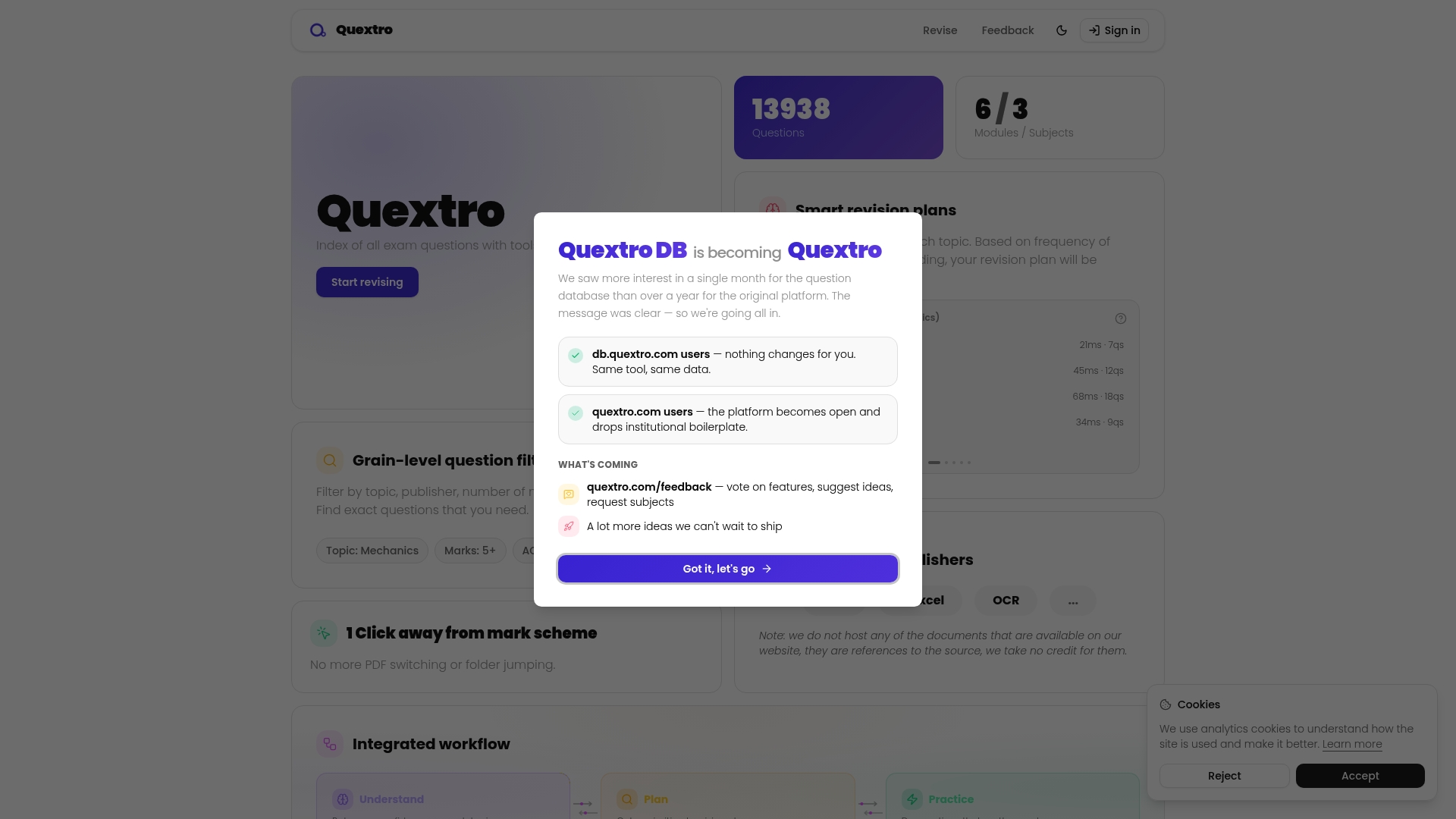
Start with Pure Mathematics question papers to sharpen your core skills, or work through Foundation Mathematics resources to close any remaining gaps. Quextro's smart revision plans adapt to your confidence levels and track your progress automatically, so every session moves you forward. Explore the full maths revision platform and see how structured practice can transform your preparation.
Frequently asked questions
What is the most effective way to revise for A Level maths exams?
The most effective revision combines goal-setting, targeted practice focusing on weaknesses, and regular checking of method and calculator accuracy. Deliberate practice with mark schemes ensures you learn from every question, not just complete it.
How do I avoid losing marks with my calculator in maths exams?
Use calculators for checking calculations, always show your working, and double-check your settings, especially degrees/radians and rounding. Calculator misuse through wrong settings and rounding errors is one of the most common reasons students drop avoidable marks.
Is having a growth mindset really important for maths exam success?
Yes, a growth mindset can improve maths progress, particularly when combined with active learning and feedback, though the effect size varies. PISA 2022 research confirms that mindset and context together determine how much improvement students see.
How should I structure my weekly maths revision?
Divide your time between new topic coverage, question practice on weak points, and review of past mistakes for the most balanced improvement. Structured exam preparation that rotates across modules prevents over-reliance on familiar topics and builds well-rounded exam confidence.