

TL;DR:
- Mastery learning improves student progress by focusing on deep understanding before advancing.
- Effective workflow includes diagnostic assessments, targeted practice, feedback, and flexible pacing.
- Using topic-filtered resources and technological tools streamlines preparation and tracks progress efficiently.
Preparing A Level maths students for exams can feel like an endless cycle of covering content, setting past papers, and hoping it all clicks in time. The gap between a student understanding a topic and performing reliably under exam conditions is wider than most teachers expect. What bridges that gap is not more content but a smarter, more deliberate workflow. This guide covers the principles, resources, and step-by-step processes behind a mastery-based exam prep workflow that reduces teacher workload, targets the right gaps, and moves students toward confident, consistent performance.
Table of Contents
- Understanding mastery learning and why it works
- Planning your exam prep workflow: resources and requirements
- Step-by-step: implementing a targeted exam prep workflow
- Feedback, common pitfalls, and workflow optimisation
- A realistic view: why the best workflows combine structure with flexibility
- Unlock more with targeted exam resources on Quextro
- Frequently asked questions
Key Takeaways
| Point | Details |
|---|---|
| Mastery boosts outcomes | Implementing mastery learning can accelerate maths progress by up to six months. |
| Efficient workflows save time | A well-planned workflow reduces admin load and maximises teaching impact. |
| Regular feedback is vital | Targeted, timely feedback drives retention and closes gaps before exams. |
| Flexibility is essential | Adapting workflow steps ensures all students reach mastery at their pace. |
Understanding mastery learning and why it works
Mastery learning is a structured teaching approach where students must demonstrate a high level of understanding before moving on to the next topic. In practice, this means setting a success threshold of around 80 to 90 percent on assessments before progression is allowed. The model relies on three core elements: diagnostic assessment to establish where each student actually is, careful sequencing of content, and flexible pacing that gives students the time they genuinely need.
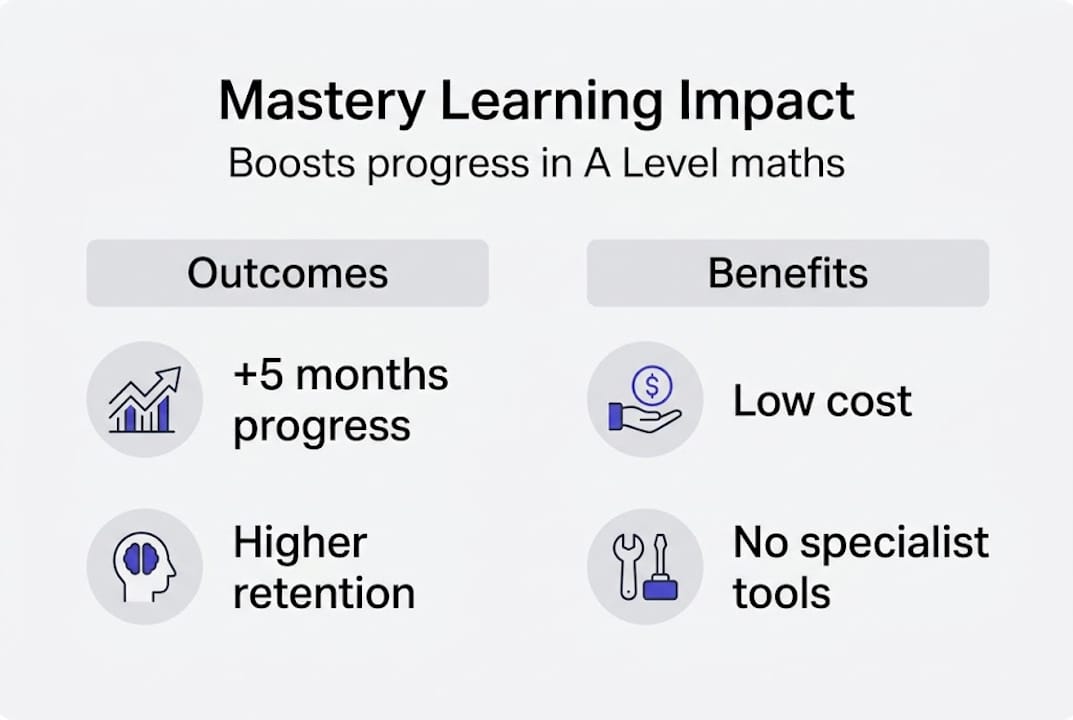
The evidence base is strong. Mastery learning produces an average of +5 months' progress overall, and +6 months specifically in maths. For A Level teachers working against a fixed exam calendar, that kind of accelerated progress matters enormously.
| Approach | Average progress gain | Maths-specific gain |
|---|---|---|
| Traditional teaching | Baseline | Baseline |
| Mastery learning | +5 months | +6 months |
| Mastery with feedback | +6 months | +7 months (estimated) |
One of the less-discussed benefits of mastery learning is how it reframes the teacher's role. Rather than delivering content and moving on, you become a diagnostician and coach. Collaborative learning plays a significant part here. When students explain concepts to peers, gaps become visible quickly. Structured pair work or small-group problem-solving sessions can surface misconceptions that individual marking misses entirely.
"The most effective mastery implementations combine high expectations with flexible time. Every student can achieve, given the right conditions and support."
Cost-effectiveness is also worth noting. Mastery learning does not require expensive software or specialist equipment. The investment is largely in planning and sequencing, which is something teachers already do. Shifting the structure of that planning, rather than adding to it, is what makes the approach sustainable. For a deeper look at how this connects to grades, explore structured exam prep and exam readiness strategies that align with these principles.
Planning your exam prep workflow: resources and requirements
Careful sequencing, regular feedback, and diagnostic assessment are the foundations of any mastery workflow, and each one requires the right tools to function properly. Before you start, it is worth auditing what you already have and identifying what is missing.
Essential resources for a mastery-based A Level maths workflow include:
- Past papers organised by topic and difficulty, not just by year
- Topic question banks that allow targeted practice on specific skills
- Diagnostic assessment tools such as short topic tests or confidence ratings
- Feedback platforms that record student responses and flag patterns
- Progress tracking systems to monitor which students have met the mastery threshold
One of the most practical decisions you will make is whether to use digital or paper-based tools. Both have genuine strengths.
| Feature | Digital tools | Paper-based tools |
|---|---|---|
| Speed of feedback | Immediate | Delayed |
| Differentiation | Automated filtering | Manual sorting |
| Progress tracking | Automatic | Manual |
| Accessibility | Requires devices | No tech needed |
| Student engagement | Often higher | Familiar format |
For most teachers, a hybrid approach works best. Paper-based practice mirrors exam conditions, while digital tools handle the administrative side of tracking and filtering.

Pro Tip: When using question banks, filter by topic and difficulty level rather than pulling full papers. This lets you target the exact skills a student needs to practise, making revision far more efficient than working through an entire paper when only two or three topics are weak.
For diagnostic tools specifically, look for anything that gives you a quick read on student understanding without requiring full marking. Short exit tickets, confidence self-ratings, and targeted five-question topic checks all work well. Guidance on organising exam questions by topic is a practical starting point. A broader look at workflow efficiency principles can also help you think about how to structure your preparation time more effectively.
Step-by-step: implementing a targeted exam prep workflow
Mastery models require diagnostic assessment, careful sequencing, and regular feedback to ensure deep understanding before students progress. Here is a workflow you can adapt to your own timetable and class.
-
Diagnose starting points. Before any revision begins, run a short diagnostic assessment for each topic area. This does not need to be lengthy. A ten-question topic test or a confidence rating exercise gives you enough data to group students and prioritise content.
-
Sequence and scaffold practice. Order topics from foundational to complex, ensuring students are not attempting harder material before they have secured the basics. Scaffold practice by starting with worked examples, moving to guided questions, and then independent exam-style questions.
-
Check for 80 to 90 percent mastery. After each topic block, assess whether students have hit the threshold. Use targeted question sets rather than full papers. The goal is a clear signal: ready to progress, or needs more time.
-
Reteach if needed. If a student has not reached the threshold, reteach using a different approach. Change the representation, use a different example type, or bring in peer explanation. Repeating the same method rarely works.
-
Provide targeted feedback. Feedback should be specific to the question type and linked to the mark scheme. Avoid general comments. Tell students exactly which step went wrong and what the correct process looks like.
Collaborative work fits naturally at stages two and four. Pair students who have reached mastery with those who have not, with clear structured tasks rather than open-ended peer tutoring.
Pro Tip: Build buffer time into your scheme of work for every topic block. Mastery takes longer for some students, and a rigid timeline will force you to move on before students are ready, which undermines the whole approach.
Technology can reduce your workload significantly at stages one, three, and five. Platforms that filter questions by topic and track responses mean you spend less time searching for resources and more time acting on what the data tells you. For more on this, see exam technique strategies and targeted exam practice.
Feedback, common pitfalls, and workflow optimisation
Regular feedback and flexible pacing are vital in maximising maths learning gains, yet these are also the two elements most likely to break down under time pressure. Knowing where workflows commonly fail helps you protect against it.
The most common mistakes in A Level maths exam prep workflows include:
- Advancing too soon. Moving students on before they reach the mastery threshold creates compounding gaps that are much harder to address later.
- Generic feedback. Comments like "show more working" or "check your algebra" do not tell students what to change. Feedback must be linked to specific steps and question types.
- Insufficient time for mastery. Treating all topics as equal in terms of time allocation ignores the reality that some areas, such as integration or proof, require significantly more practice.
- Skipping diagnostic assessment. Starting revision without knowing where students actually are wastes time on content they already understand.
- Inconsistent tracking. Without a reliable system for recording progress, it is easy to lose sight of which students have met the threshold and which have not.
"Flexible time and high expectations are the keys to success in mastery learning. Neither alone is sufficient."
Feedback works best when it is timely, specific, and directly linked to the mastery check. If a student answers a set of integration questions incorrectly, the feedback should identify the exact step where the method breaks down, not just mark it wrong. Rapid feedback cycles, where students receive and act on feedback within the same session, produce the strongest results.
For workflow optimisation, review your process after each topic block. Ask: did students reach the threshold? If not, why not? Was the sequencing right? Was there enough practice time? Small adjustments after each cycle compound into significant improvements over a term. Explore reviewing exam answers and best practices for exam prep for further refinement ideas.
A realistic view: why the best workflows combine structure with flexibility
Here is something the research does not always say plainly: there is no single workflow that works for every class, every topic, or every cohort. The teachers who get the best results are not those who follow a framework most rigidly. They are the ones who use a reliable structure as a starting point and then adapt it continuously based on what they observe.
Structure matters because it creates consistency. Students benefit from knowing what to expect: a diagnostic check, focused practice, a mastery assessment, feedback, and then progression. That rhythm builds confidence and reduces anxiety. But flexibility is what enables real progress. A class that struggles with calculus needs more time there, even if the scheme of work says otherwise.
Teacher judgement is the variable that no framework can replace. Ongoing review, honest reflection on what is working, and a willingness to experiment within a reliable structure are what separate good exam prep from great exam prep. The evidence supports mastery learning, but it also supports practising exam questions consistently as the mechanism through which mastery becomes visible under exam conditions.
Unlock more with targeted exam resources on Quextro
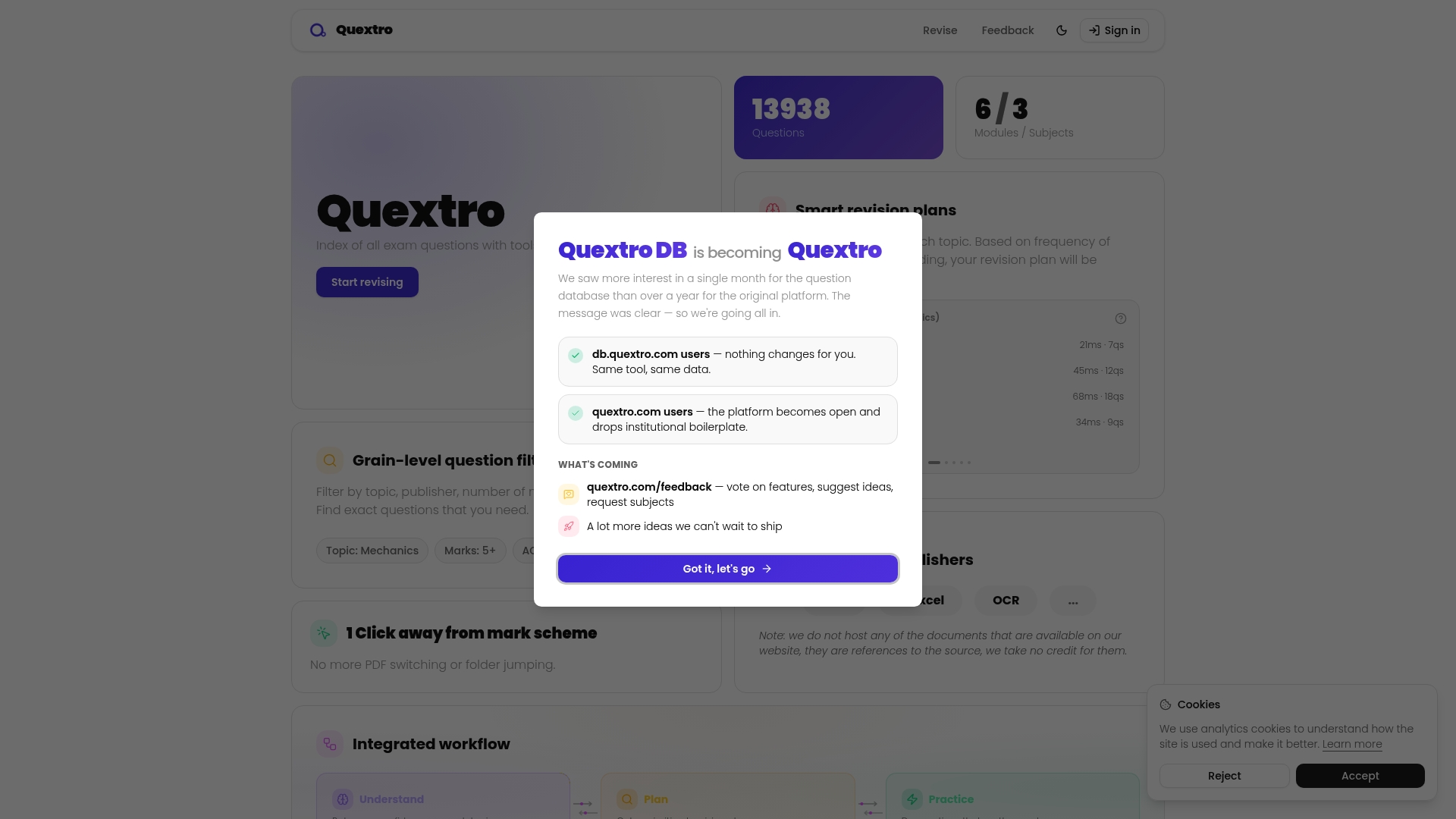
Building a mastery-based workflow is far easier when your resources are already organised by topic, difficulty, and exam board. Quextro gives A Level maths teachers access to over 13,955 past exam questions, all filterable by topic, marks, and publisher, so you can pull exactly the right questions for each stage of your workflow without spending hours searching through PDFs.
Whether you are running diagnostic checks, building scaffolded practice sets, or preparing mastery assessments, Quextro fits directly into the workflow described in this guide. Browse A Level statistics resources or explore A Level pure maths questions to start building targeted question sets for your students today.
Frequently asked questions
What is the most effective starting point for A Level maths exam prep?
Begin with diagnostic assessment to identify each student's gaps and establish a clear, sequenced learning plan before any revision begins.
How can I ensure students reach mastery before moving on?
Use regular topic checks targeting 80 to 90 percent success and reteach using a different approach if students fall short before progressing.
What types of resources best support a mastery workflow?
A combination of topic-based question banks, past papers organised by difficulty, and feedback tools gives you the targeted practice and gap analysis that mastery learning requires.
How much time does a mastery-based workflow add to preparation?
Some topics will take longer, but flexibility in pacing produces deeper understanding and better exam outcomes, making the additional time a worthwhile investment.