

TL;DR:
- Targeted question filtering significantly improves scores by focusing on exam-relevant topics and weaknesses.
- Organizing resources and tracking progress ensures efficient practice and highlights areas for improvement.
- Consistent review, reflection, and adaptation are essential to achieve higher grades and reach grade boundaries.
You have spent hours working through past papers, yet your scores refuse to budge. It is one of the most demoralising experiences in A Level preparation: putting in the time but seeing no return. The problem is rarely effort. It is almost always method. Random practice, where you grab whatever question is nearby and hope for the best, creates the illusion of progress without the substance. This guide walks you through a proven, step-by-step system for practising A Level maths exam questions strategically, so every session moves you measurably closer to the grade you are aiming for.
Table of Contents
- Understand the importance of targeted question practice
- Gather resources and organise practice materials
- Apply strategic question selection: Step-by-step system
- Review, reflect, and adapt: Sustaining improvement
- Our perspective: Why strategic steps beat unlimited question volume
- Take the next step with targeted, high-impact practice
- Frequently asked questions
Key Takeaways
| Point | Details |
|---|---|
| Target weaknesses first | Prioritising weak topics boosts improvement faster than random practice. |
| Organise before practising | Having resources ready and sorted saves time and maximises session quality. |
| Use a stepwise system | The 60-30-10 approach ensures balanced growth across all topics. |
| Review and adapt regularly | Analysing mistakes and adjusting your plan keeps progress on track for top grades. |
Understand the importance of targeted question practice
Most students approach revision the same way: open a past paper, start at question one, and work through until time runs out. It feels productive. It rarely is. This approach has a fundamental flaw: it treats all questions as equally valuable, regardless of your current weaknesses or the topics most likely to appear in your exam.
Random practice creates skill gaps you cannot see. You naturally spend more time on topics you already understand, because they feel comfortable. Meanwhile, the areas where you drop marks quietly go unaddressed. Over time, this builds a lopsided skill set that lets you down precisely when it matters most.
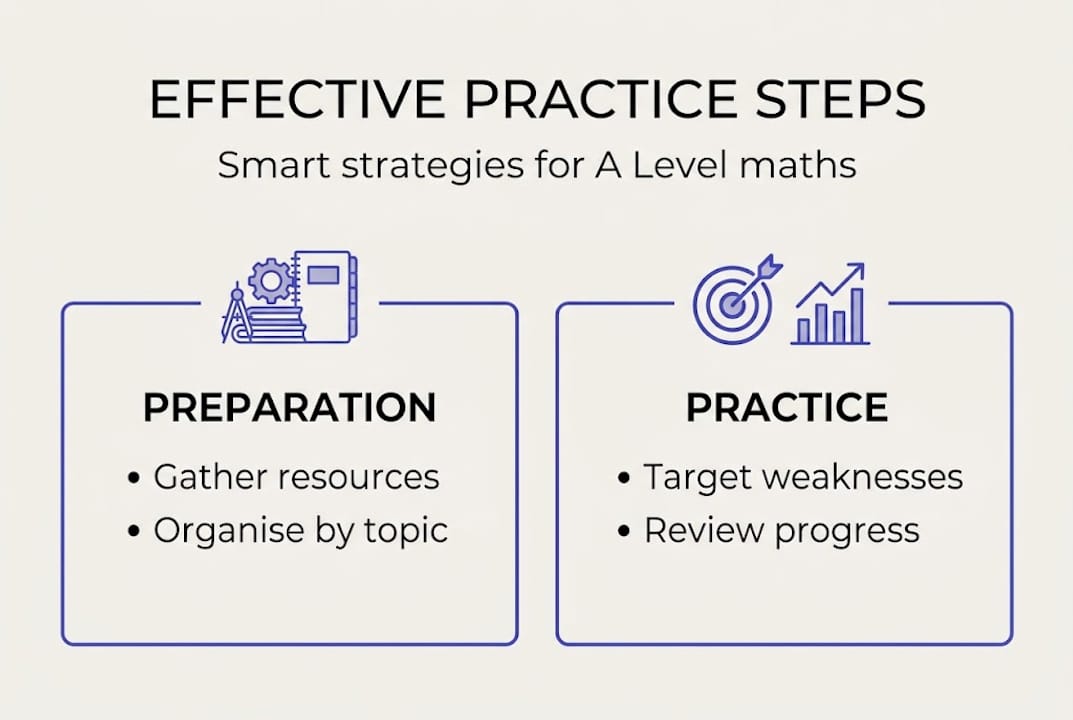
The alternative is targeted question filtering, which means deliberately choosing questions based on topic, difficulty, and your personal performance history. The difference in outcomes is significant. Strategic filtering leads to a 15 to 20% score improvement compared to random practice. That is not a marginal gain. For a student sitting on a B, it could be the difference between achieving an A or A*.
Consider the topic distribution of A Level maths papers. Calculus, including differentiation and integration, appears in over 80% of A Level maths exams. If you are not deliberately targeting that topic, you are leaving marks on the table in almost every paper you sit.
Here is what targeted practice actually delivers:
- Confidence in your weakest topics, because you address them head-on rather than avoiding them
- Clarity about which areas still need work, thanks to a trackable record of performance
- Better time management in the exam, because familiar question types take less mental effort
- Reduced anxiety, since you walk in knowing you have covered the high-frequency topics thoroughly
Pro Tip: Before every revision session, spend two minutes deciding which topic you are targeting and why. Choosing with purpose, rather than opening a random paper, is the single fastest way to improve the quality of your practice.
Gather resources and organise practice materials
Knowing why question targeting works is one thing. Actually doing it requires the right materials, organised in a way that makes filtering and tracking straightforward. Preparation here saves significant time later.
You will need four core resource types to get started:
- Past papers and mark schemes from your exam board (AQA, Edexcel, OCR, or CIE)
- Your syllabus or specification, so you know exactly which topics are examinable
- A topic list, either from your specification or a revision guide, broken into subtopics
- A tracking sheet, either a spreadsheet or a notebook, to log which questions you have attempted and how you performed
Organising exam questions by topic from the outset, rather than by paper or year, is the most effective structure. It means you can pull together ten calculus questions from different papers in minutes, rather than hunting through individual documents.

Here is a simple overview of each resource, its purpose, and how to organise it:
| Resource | Purpose | Source | Organisation tip |
|---|---|---|---|
| Past papers | Authentic question practice | Exam board websites | Sort by topic, not by year |
| Mark schemes | Self-marking and error analysis | Exam board websites | Keep alongside matching papers |
| Syllabus | Confirm examinable content | Exam board websites | Highlight completed topics |
| Topic list | Guide your question selection | Revision guides or syllabus | Rank topics by confidence level |
| Tracking sheet | Monitor progress over time | Create your own | Update after every session |
For revision by exam topic, digital tools work particularly well. A simple spreadsheet with columns for topic, question source, marks available, marks scored, and notes on errors gives you a clear performance picture within a few sessions.
When practising, track these criteria for every question you attempt:
- Topic and subtopic
- Difficulty level (low, medium, high)
- Marks available versus marks scored
- Type of error (conceptual, procedural, or careless)
Organising practice materials by topic also ensures you address high-frequency areas like calculus consistently, rather than accidentally neglecting them. Reviewing questions with solutions as part of your setup helps you understand the standard of working expected before you begin.
Apply strategic question selection: Step-by-step system
With your resources ready, you can now follow a structured selection process that maximises the value of every practice session. This is where most students see the sharpest improvements.
Follow these steps to build your practice sets:
- Sort your question bank by topic. Group all available questions under each syllabus topic, regardless of which paper they came from.
- Analyse topic frequency. Review the last five to seven years of papers and note how often each topic appears. Prioritise the most frequent.
- Rate your confidence in each topic on a scale of one to five. Be honest. This is the foundation of your selection strategy.
- Apply the 60-30-10 rule. Selecting 60% weak-topic questions, 30% moderate-topic questions, and 10% strong-topic questions delivers measurably higher progress than random selection.
- Begin with single-topic sets. Work through focused blocks before moving to mixed practice.
- Gradually introduce timed mixed sets once you are consistently scoring well on individual topics.
Here is how strategic selection compares to random practice:
| Approach | Strengths | Weaknesses | Expected outcome |
|---|---|---|---|
| Random practice | Easy to start, covers variety | Reinforces strengths, ignores gaps | Slow, inconsistent progress |
| Strategic selection | Targets weaknesses, tracks progress | Requires upfront planning | Faster, measurable improvement |
The topic-then-mixed progression is critical. Jumping straight into full mixed papers before mastering individual topics is one of the most common mistakes in structured exam preparation. It creates confusion and erodes confidence.
Pro Tip: Map the last three years of your specific exam board's papers and note which topics appeared in every single one. Those are your non-negotiables. Build your 60% weak-topic allocation around them first.
Also be alert to over-focusing on topics you enjoy. It is easy to drift toward algebra or statistics because they feel manageable. Your tracking sheet will catch this if you review it honestly each week. Best practices for exam preparation consistently point to balance across the full syllabus, not depth in a narrow range.
Review, reflect, and adapt: Sustaining improvement
Even the best selection system stops working if you never review what it is telling you. Progress in A Level maths is not linear. You will hit plateaus, and the way you respond to them determines whether your grade climbs or stalls.
Set measurable milestones from the start. After completing a topic set, calculate your percentage score and compare it to your previous attempt. A clear upward trend confirms the approach is working. A flat line signals it is time to change something.
When you self-mark, go beyond ticking and crossing. Categorise every error:
- Conceptual gap: You did not understand the underlying method.
- Procedural slip: You knew the method but made an error in execution.
- Careless mistake: You understood everything but lost marks through rushing or misreading.
Each type requires a different response. Conceptual gaps need re-teaching. Procedural slips need more practice with that specific technique. Careless mistakes need exam technique work, such as checking time and reviewing working before moving on.
The stakes for getting this right are high. A* grade boundaries now sit at 75 to 85%, up significantly from previous years, meaning review sessions are no longer optional. They are essential.
"A* now requires 75–85% marks as grade boundaries rise. Attention to detail and thorough review sessions are no longer a bonus. They are the baseline."
If you hit a score plateau, work through these steps in order:
- Switch to a different set of questions on the same topic from a different exam board.
- Attempt questions under timed conditions to simulate exam pressure.
- Try peer marking with a classmate to spot errors you have become blind to.
- Return to your notes or a worked example before attempting the topic again fresh.
The cycle is simple: practise, review, adjust, and repeat. Students who follow this loop consistently are the ones who see their scores climb in the final weeks before the exam. Pairing this with honest tracking of exam difficulty and grade trends keeps your targets realistic and your preparation sharp. For more on building this into a full plan, effective exam preparation resources can help you structure your remaining time.
Our perspective: Why strategic steps beat unlimited question volume
There is a persistent myth in A Level revision: that doing more questions automatically means doing better. We have seen hundreds of students work through enormous stacks of past papers and still fall short of their target grade. Volume without direction is not revision. It is repetition dressed up as effort.
The students who make the fastest progress share a pattern. They keep sessions focused on specific weaknesses. They review every session honestly. And when something is not working, they change it. They do not simply do more of the same and hope for a different result.
Random practice is particularly damaging for students chasing top grades. As grade boundaries continue rising, the margin for unaddressed gaps shrinks. An A* in 2026 demands a level of precision that only comes from deliberate, adaptive practice.
Quality beats quantity. A focused 45-minute session built around your three weakest subtopics will outperform two hours of aimless paper-shuffling every single time. Commit to the system, review honestly, and adapt quickly.
Take the next step with targeted, high-impact practice
You now have a clear system. The next step is finding the right questions to put it into action.
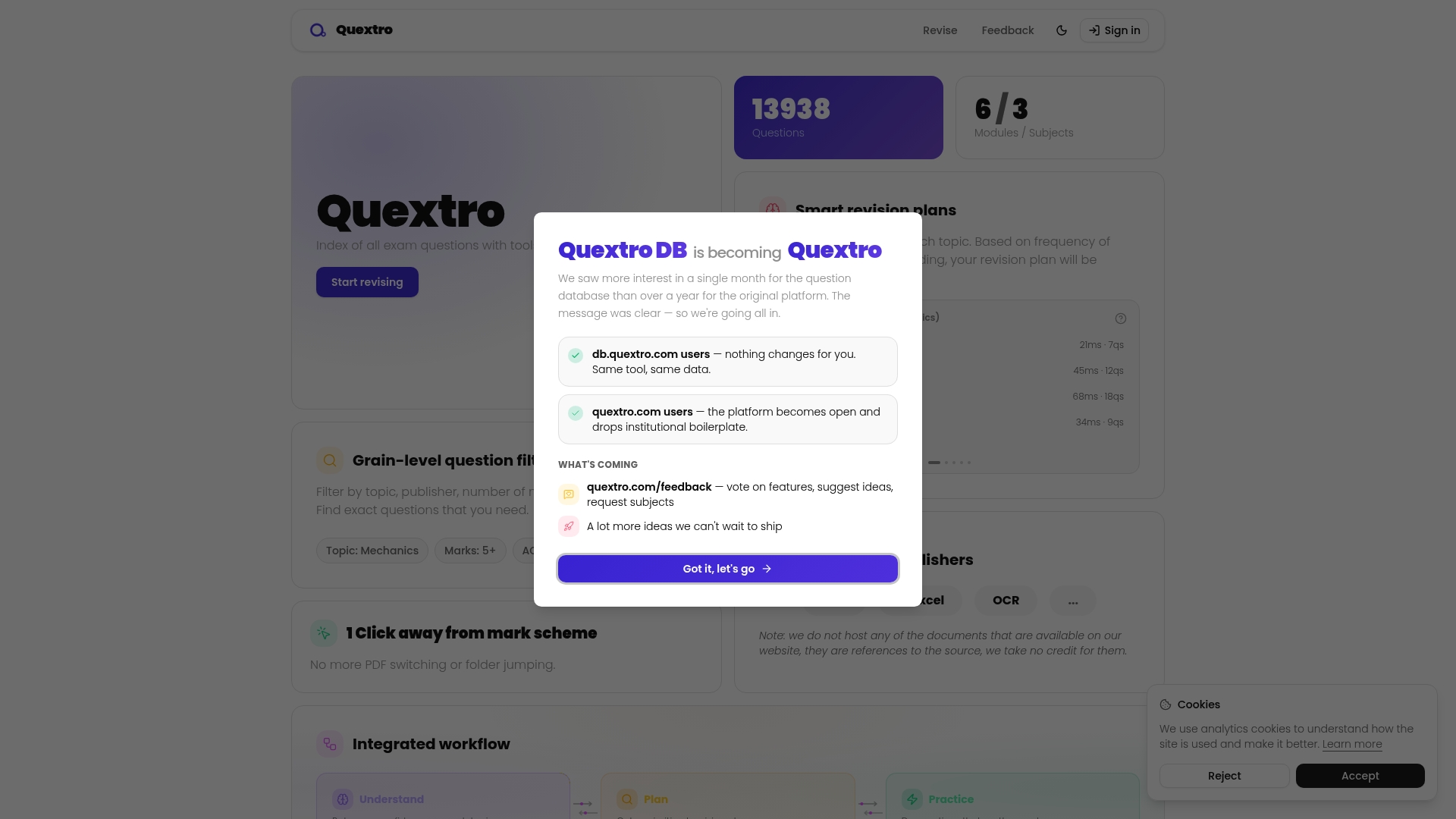
Quextro gives you instant access to over 13,955 past exam questions, filterable by topic, difficulty, exam board, and marks. No more hunting through PDFs or guessing which questions to attempt next. You can jump straight into Pure Mathematics question sets or work through Statistics practice papers that align precisely with the structured approach outlined in this guide. Smart revision plans adapt to your confidence ratings, so your practice always reflects your current needs. If you are serious about improving your grade before your exams, this is where focused preparation begins.
Frequently asked questions
How many practice questions should I do per topic?
Aim for 5 to 10 carefully chosen questions per topic, adjusting based on your confidence and error rate. Strategic filtering consistently outperforms completing hundreds of random questions.
When should I move from topic-specific to mixed questions?
Switch to mixed practice once you are scoring 80% or above in single-topic sets and can explain most of your errors. Building confidence per topic before mixing prevents demotivation and confusion.
What grade boundary should I target for an A* in 2026?
Aim for 75 to 85% raw marks, as A* boundaries have risen from 57% in 2022 to 74% in 2024, and the trend is continuing upward.
What is the fastest way to identify weak areas?
Sort recent papers by topic, log your scores, and focus immediately on the topics with your highest error rate. Prioritising weak topics with data from your own performance drives faster improvement than guessing.
How do I prevent careless mistakes in maths exams?
Always review your working step by step, check units and signs, and reserve the final few minutes to re-read your answers. Attention to detail becomes increasingly critical as grade boundaries rise.