

TL;DR:
- AQA shapes question style, mark schemes, and assessment focus in UK A Level Maths exams.
- Understanding AQA's structure and examiner expectations improves revision efficiency and performance.
- Practicing authentic past papers and analyzing examiner reports aligns study with AQA's priorities.
Many students sit their A Level Maths exams without really understanding which exam board set the paper, let alone why that matters. AQA is one of the most widely used boards in England, yet its influence on question style, mark allocation, and revision strategy is routinely overlooked. Knowing exactly what AQA does, how it structures its assessments, and what its examiners reward can change how efficiently you revise. This guide walks you through AQA's role from start to finish, so you can stop preparing in the dark and start working with the system rather than against it.
Table of Contents
- What is AQA and how does it shape your maths exam?
- The AQA exam structure: What to expect in your papers
- How AQA designs and marks maths exams: Fairness and standards
- Maximise your preparation: Study strategies tailored to AQA maths exams
- Our take: Why understanding AQA's role gives you a real edge
- Boost your AQA maths revision with tailored resources
- Frequently asked questions
Key Takeaways
| Point | Details |
|---|---|
| AQA sets the rules | Understanding AQA’s specification means you’ll know exactly what’s assessed on your A Level maths papers. |
| Exam structure matters | Familiarity with paper formats and question types lets you focus your revision more effectively. |
| Mark schemes guide success | Practising with AQA mark schemes helps you earn marks and avoid common pitfalls in your answers. |
| Process-driven fairness | AQA ensures every student is assessed fairly through rigorous exam design and marking standardisation. |
| Board-specific strategies | Tailoring your preparation to AQA’s approach gives you a competitive edge at exam time. |
What is AQA and how does it shape your maths exam?
With the confusion about exam boards in mind, let's clarify who AQA is and why it matters to your A Level Maths journey.
AQA stands for Assessment and Qualifications Alliance. It is one of the UK's major exam boards, responsible for creating specifications and assessments used by thousands of schools and colleges across England. Alongside Edexcel and OCR, AQA shapes how millions of students are assessed each year. If your school enters you for AQA Maths, every paper you sit, every mark scheme that grades your work, and every grade boundary that determines your result has been produced by this organisation.
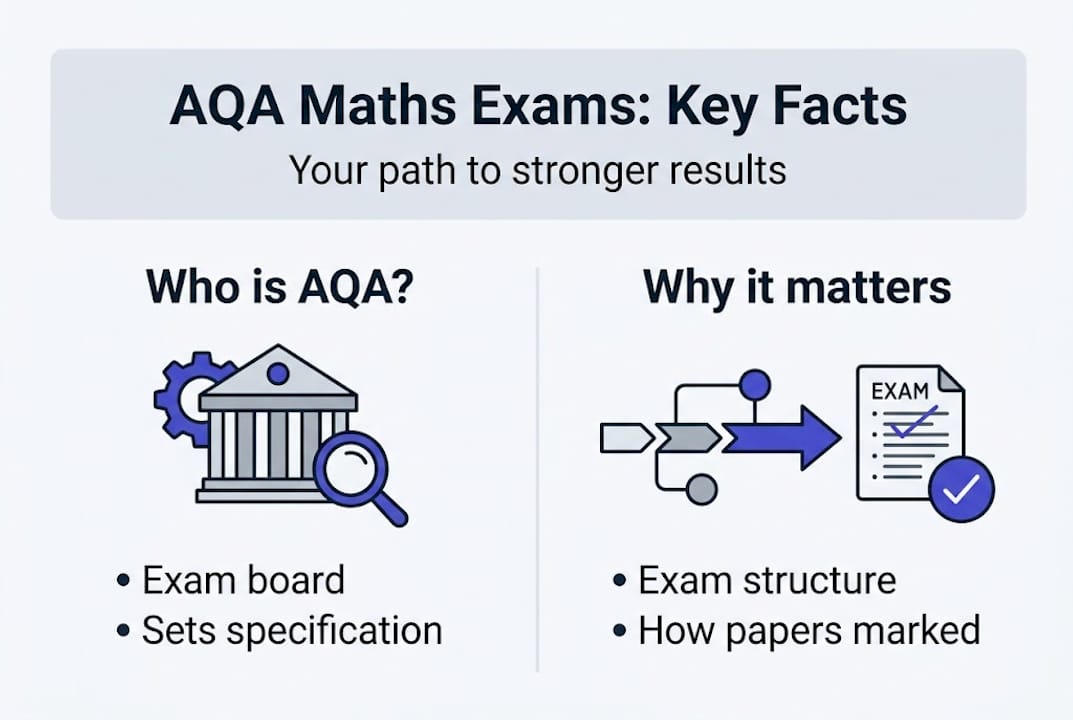
AQA writes and regularly updates the specification for A Level Mathematics, which acts as the master document governing every topic you must cover. The specification does not just list content. It also defines assessment objectives, the weighting given to different skills, and the proportion of marks dedicated to proof, modelling, and problem-solving.
Here is what AQA actively controls in your exam:
- The specification content: Every topic area you are expected to know, from calculus to hypothesis testing
- Question authorship: AQA employs subject specialists and experienced teachers to write and pilot exam questions
- Mark schemes: Detailed guidance telling examiners precisely which steps earn method marks and which earn accuracy marks
- Examiner training: Standardisation meetings ensure every script is marked consistently
- Grade boundaries: Set after each exam series based on performance data
What this means practically is that AQA's choices directly influence which topics appear most often, how questions are worded, and what level of working you are expected to show. Studying an AQA maths revision guide tailored to the board's specific priorities is far more targeted than using generic revision materials.
Pro Tip: Download the AQA specification and keep it open during revision. Tick off topics as you cover them. This prevents gaps and keeps your effort aligned with what is actually assessed.
The AQA exam structure: What to expect in your papers
Now that you know AQA sets the framework, it's crucial to recognise exactly what their assessment looks like.
AQA A Level Mathematics is examined across three papers, all sat at the end of Year 13. AQA's published specification outlines the assessment methods and question frameworks in full. Here is a breakdown of what each paper involves:
| Paper | Duration | Marks | Content focus |
|---|---|---|---|
| Paper 1 | 2 hours | 100 | Pure mathematics only |
| Paper 2 | 2 hours | 100 | Pure mathematics and statistics |
| Paper 3 | 2 hours | 100 | Pure mathematics and mechanics |
All three papers allow calculators, and every paper carries equal weighting. Pure mathematics makes up roughly two-thirds of the total marks across the series, which tells you immediately where to invest the majority of your revision time.
Question types you will encounter include:
- Structured questions: Multi-part problems guiding you through a method step by step
- Proof questions: Requiring formal algebraic or geometric reasoning with full working
- Application questions: Real-world contexts such as modelling population growth or projectile motion
- Show that questions: Where the answer is given and you must demonstrate the correct route to it
Understanding how AQA constructs questions changes how you answer maths exam questions under pressure. For instance, AQA's mark schemes award method marks independently of accuracy marks. This means even a wrong final answer can earn significant credit if your working demonstrates correct reasoning.
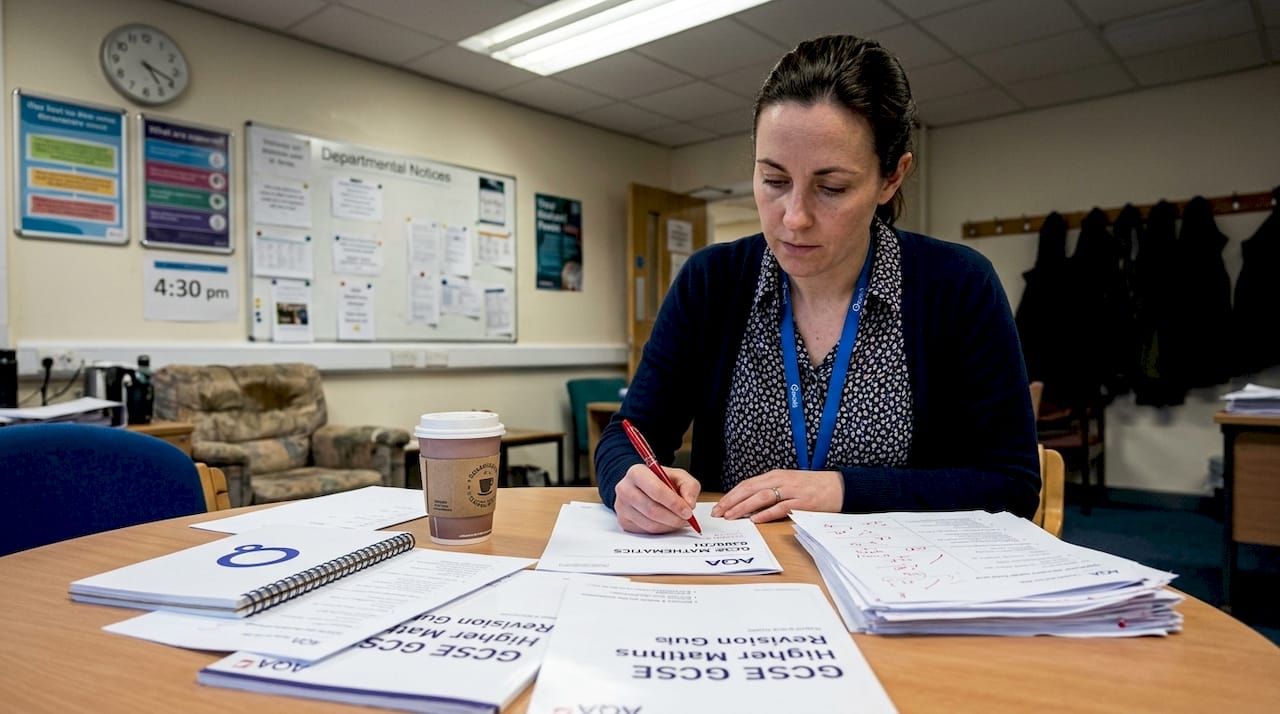
Using an exam preparation checklist that maps to AQA's three-paper format helps you avoid under-preparing any one area before sitting the exams.
Pro Tip: Because pure mathematics spans all three papers, treating it as the backbone of your revision rather than just one topic will deliver returns across your entire mark profile.
How AQA designs and marks maths exams: Fairness and standards
Understanding the format is one part, but how AQA designs and marks your exam shapes how you should approach your answers.
AQA's question writing process involves multiple layers of review. Subject specialists draft questions, which are then reviewed by senior examiners, trialled against student cohorts, and revised before finalisation. This process ensures syllabus coverage, appropriate difficulty distribution, and accessible language across all questions.
Once papers are sat, AQA's mark schemes and examiner reports show how consistent marking and fairness are maintained. Markers attend standardisation meetings where they apply the mark scheme to sample scripts together, ironing out any ambiguity before marking begins at scale.
"A well-structured answer that shows clear logical steps will always score higher than a correct answer with no working shown." This reflects the central principle behind AQA's method mark system.
Here is how AQA's marking approach compares with another major board:
| Feature | AQA | Edexcel |
|---|---|---|
| Method marks available without correct answer | Yes | Yes |
| Follow-through marks for consistent errors | Yes | Yes |
| Specific wording required for written explanations | Sometimes | More frequently |
| Examiner report published per series | Yes | Yes |
For you, this means two things matter beyond knowing the maths. First, show every step of your working, even when it feels obvious. Second, write explanations in plain, precise language rather than vague statements. Tips for boosting maths exam success consistently point to these habits as the difference between a B and an A grade.
Examiner reports are published after every series and are free to access. They list the most common errors students made, the questions that were answered poorly, and what correct responses looked like. Reading them is one of the most underused revision strategies available.
Maximise your preparation: Study strategies tailored to AQA maths exams
With a strong grasp of AQA's approach, you can now shape your revision to align with their expectations and structure.
AQA past papers are among the most effective revision resources for A Level Maths. Practising on authentic AQA papers trains you in the specific question phrasing, layout, and difficulty progression the board uses. Generic practice questions, however well written, cannot replicate this.
Here is a structured approach to AQA-specific revision:
- Audit the specification first. Identify your weakest topic areas before you start timed practice.
- Complete past papers under timed conditions. Simulate the full two-hour paper environment for each of the three papers.
- Mark your own work against the official mark scheme. Note where you lost marks and whether those were method or accuracy errors.
- Read the examiner report for each paper. Cross-reference your errors with the common mistakes listed by examiners.
- Target repeated question types. AQA regularly tests integration by parts, hypothesis testing, and kinematics. Concentrated drilling pays off.
Beyond timed practice, use mark schemes actively rather than passively. When you check an answer, ask not just whether you got it right but whether your method matched the one the mark scheme rewards. This builds effective exam technique strategies that align directly with what AQA examiners are trained to credit.
Knowing how to review past papers effectively is as important as completing them. Many students simply mark their answers and move on. The real value is in analysing why you lost marks and adjusting your approach accordingly.
- Focus on topics with the highest mark allocation first
- Prioritise understanding proof structures, as these appear across all three papers
- Practice interpreting question context, particularly for applied topics in statistics and mechanics
Our take: Why understanding AQA's role gives you a real edge
Most revision advice points students towards content. Revise more topics. Do more past papers. Work harder. That is not wrong, but it misses something important.
The students who consistently achieve top grades in AQA Maths are not simply those who know the most content. They are the ones who understand how AQA thinks. They have read the examiner reports. They know which question types reliably appear. They have internalised the mark scheme logic well enough to self-assess accurately.
Reverse-engineering AQA's priorities is a legitimate and underused strategy. When you study what examiners consistently reward and penalise, you stop wasting revision time on low-value activities and start investing it where it counts. This is not about gaming the system. It is about working with genuine understanding rather than blind effort.
Our view at Quextro is that exam readiness strategies that incorporate board-specific knowledge outperform generic revision every time. It sounds simple. Know your exam board. But very few students act on it. Those who do gain a decisive, practical advantage.
Boost your AQA maths revision with tailored resources
Ready to level up your revision? Here is how you can put this understanding to work with Quextro's resources.
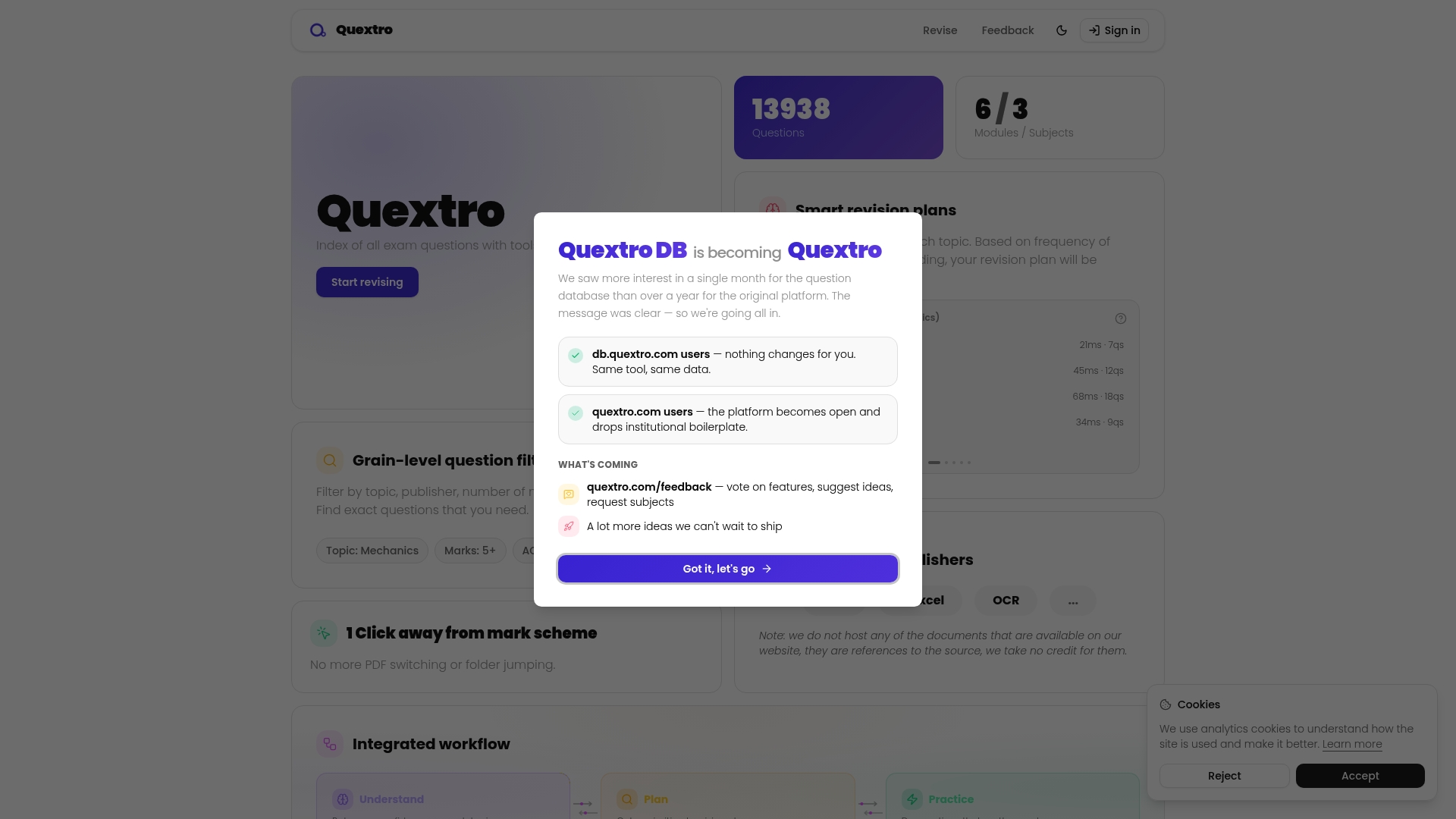
Quextro gives you access to over 13,955 past exam questions organised by topic, difficulty, and exam board, including a dedicated bank of AQA pure mathematics questions and a separate collection of AQA statistics questions. You can filter by topic, mark value, and question type, meaning every session targets exactly what you need. Smart revision plans adapt as your confidence grows, and your progress saves automatically so nothing is lost between sessions. If you are serious about aligning your preparation with what AQA actually rewards, the Quextro revision platform is built precisely for that.
Frequently asked questions
Is AQA harder than other exam boards for A Level maths?
AQA aims for fairness and broadly similar challenge levels across boards, though grade boundaries and parity are maintained carefully. Question style and topic emphasis do differ noticeably between AQA and other boards.
How can I tell if I'm answering AQA maths questions in the expected way?
Study examiner reports and mark schemes for each paper series to see precisely which methods earn marks and which common errors lose them. Clear, stepwise working is consistently rewarded.
Where can I find reliable AQA past papers for maths revision?
The most complete and current collection is available directly through the AQA past paper archive, including mark schemes for every available series.
Does AQA update the maths specification frequently?
Major updates are infrequent. The current specification was published in 2017 and refined for assessment needs since then, so always verify you are using the most recent version each academic year.